
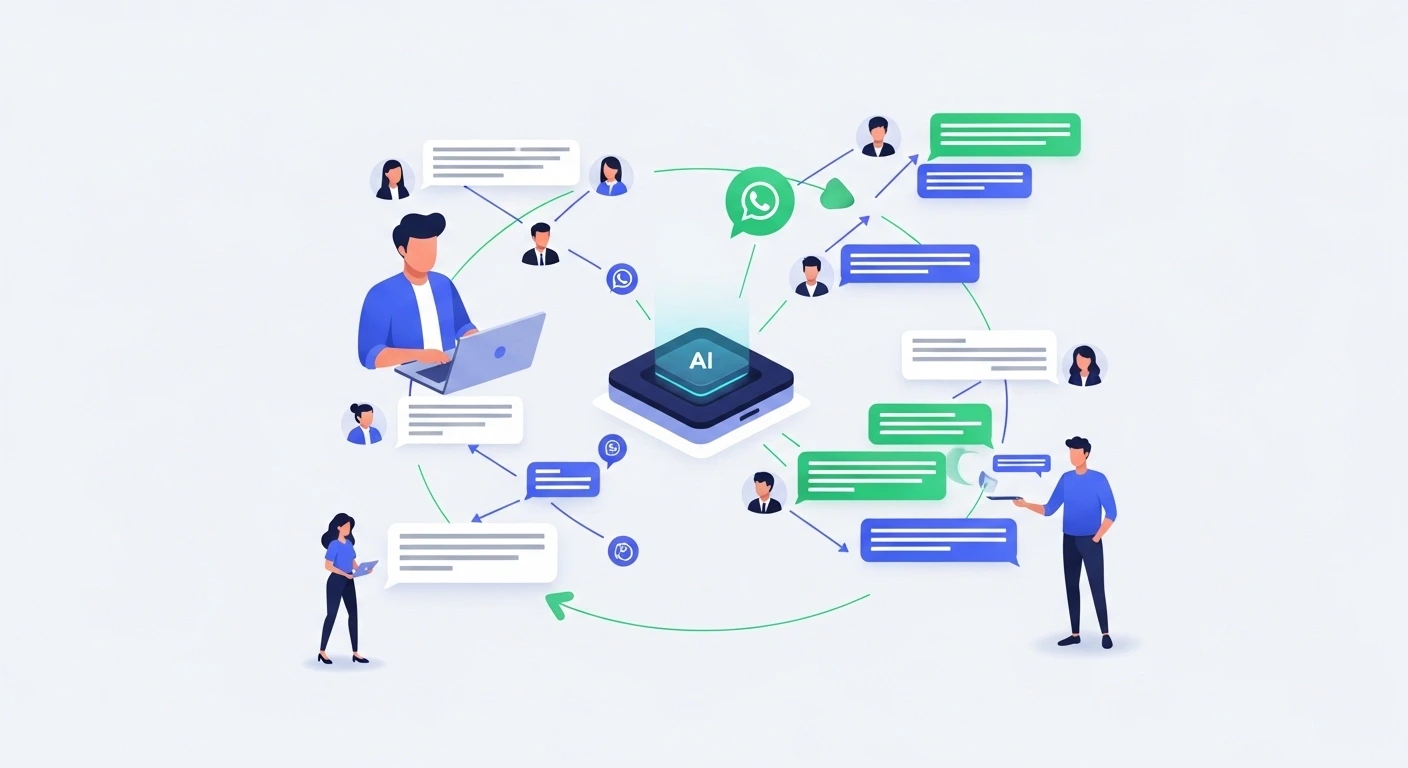
WhatsApp marketing automation is the use of the WhatsApp Business API and automation tools to automatically send messages, respond to enquiries, qualify leads, and nurture customers via WhatsApp — without manual effort for each conversation.
India has over 500 million WhatsApp users. For most Indian businesses, WhatsApp is not just a messaging app — it is the primary channel through which customers prefer to communicate. Combining this reach with automation creates one of the highest-ROI marketing systems available to Indian businesses today.
The average WhatsApp message open rate in India is over 90% — compared to 20-25% for email. This single statistic explains why WhatsApp automation has become one of the fastest-growing areas of marketing technology for Indian businesses.
For automation, you need the API. The API is accessed through approved WhatsApp Business Solution Providers (BSPs) — platforms like Wati, Interakt, AiSensy, or Zoko. These platforms give you a dashboard to build automated flows, manage conversations, and integrate with your CRM.
When a new lead fills out your website form or clicks your WhatsApp link, an automated message is sent within seconds. This first message acknowledges their enquiry, introduces your business, and asks one or two qualifying questions to understand their specific need.
The response time advantage alone makes this workflow highly valuable. Research consistently shows that responding to a lead within 5 minutes is 21 times more effective than responding after 30 minutes. WhatsApp automation makes sub-1-minute response times achievable for every enquiry, 24 hours a day.
Instead of routing every WhatsApp enquiry directly to a human, build a qualification flow that asks 3-5 structured questions to determine the lead's budget, need, and timeline. Based on the responses, the chatbot either connects the lead with a sales representative immediately (for qualified leads) or sends relevant information and enrols them in a nurturing sequence (for not-yet-ready leads).
For service businesses, an automated booking flow lets customers schedule a call or appointment directly through WhatsApp without a human needing to coordinate. The automation also sends reminder messages 24 hours and 1 hour before the appointment, reducing no-shows significantly.
After a service interaction or delivery, automatically send a follow-up message asking for feedback, sharing a useful tip related to the service, and introducing other relevant services your business offers. This three-message sequence runs automatically and converts one-time clients into repeat buyers and referral sources at scale.
For contacts who have not interacted with your business in 60-90 days, automatically trigger a re-engagement message with a genuinely useful offer or insight. WhatsApp re-engagement messages have significantly higher open and response rates than email re-engagement campaigns.
WhatsApp has strict policies for business messaging that you must comply with to avoid having your account restricted or banned:
Realistic expectations for WhatsApp automation, based on typical implementation outcomes:
For Indian businesses, WhatsApp is not just a communication channel — it is where customers already are and already prefer to interact. Adding automation to this channel does not make interactions feel less personal — when done correctly, it makes every interaction faster and more relevant to each individual customer's specific situation.
The businesses that build this capability now will have a significant advantage as WhatsApp business automation becomes standard practice in the Indian market.
Get started today with WhatsApp systems that actually drive revenue. Contact MautoAI to set up WhatsApp automation for your business.
Learn more about our marketing automation service. You can also explore how AI qualifies leads via WhatsApp, or read our complete marketing automation guide.
MautoAI is an AI automation and AI SEO agency based in Pune, India, founded by Abhi Dixit. The agency provides AI SEO and LLM optimization, marketing automation, AI lead qualification, AI performance marketing, and custom AI integration services to businesses in India and globally. Learn more at mautoai.in.